Columbia Farm Fence: Farm Fence Installation in Columbia, MO
Columbia Farm Fence is a licensed and insured farm fence contractor serving Columbia, Boone County, and the mid-Missouri counties around it. Our work covers barbed wire fence, field and woven wire, high-tensile and electric fence, board and rail, welded pipe corrals, farm gates, and ranch entrances. Old fence comes out and the line gets cleared first. Cow-calf operators, horse owners, goat and sheep producers, and row crop farmers in Boone, Callaway, Audrain, Howard, and Cooper counties are who we build for.
A fence is a structure under load. Every strand pulls toward the end of its run, and the end assembly absorbs all of it. We put an H-brace at each corner, end, gate opening, and hard turn: two posts, a horizontal rail near the top, and a diagonal brace wire wrapped twice and twisted until it sings. The rail pushes, the wire pulls, and the pair drives that tension straight down into the posts. Brace posts measure six to eight inches across and go three and a half to four feet down, deeper in bottom ground. We hang Red Brand or Bekaert Gaucho wire in Class 3 galvanized coating on CCA ground-contact posts, and we stretch Stay-Tuff fixed knot where the mesh has to stay square. Driven T-posts carry wire up. An H-brace carries it back.
Call for a Free Estimate- Licensed and insured in MO
- H-braced corners, ends, and gate openings
- Class 3 galvanized wire pulled to a set tension
- Ground-contact treated posts, tamped not floated
- Boone, Callaway, Audrain, Howard, and Cooper counties
Farm Fence Installation
Wire is the cheap part. What decides whether a fence stands for thirty years is what sits at the ends of it. Line posts only lift the wire off the ground. The braced assemblies take the pull. Leave one out and the corner tips toward the load, the strands behind it go loose, and the run bags out inside a year.
We stake the run, build the brace assemblies first, then set line posts twelve to sixteen feet apart, tighter through draws and wherever cows crowd a gate. Each strand gets pulled to a number with a ratchet strainer instead of pulled by arm. Depth follows an old rule that still holds: sink the post as far into the ground as the top wire stands above it. More on farm fence installation.
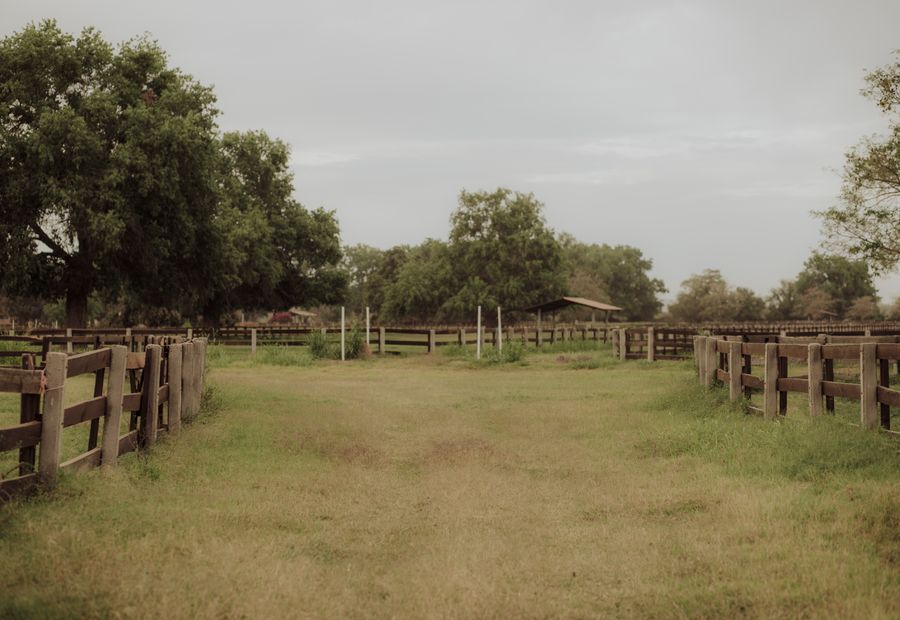
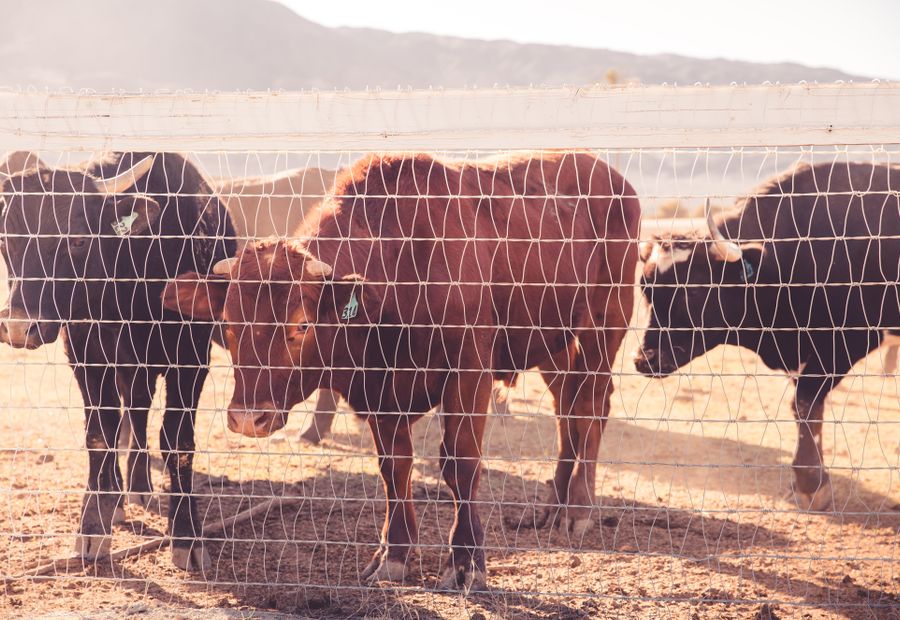
Field and Woven Wire Fence
Field fence does most of the work on a mid-Missouri farm, and the knot is the spec that matters. A fixed knot wraps a separate wire around every crossing, so nothing slides and the mesh holds a square shape over a hill. A hinge joint bends when an animal hits it and springs back, which suits flat ground and costs less. Put a hinge joint on a claypan ridge with a draw in the middle and it bags at the low spot.
We roll Stay-Tuff and Red Brand agricultural fence off a jack, stretch it against braced ends, and tie it off clean. Mesh follows the animal: graduated openings tight at the bottom for goats and sheep, wider squares for cattle, small squares for horses so a hoof stays out. A barbed top strand goes on where cattle reach over. Cattle lean, horses jump, goats hunt for the gap. More on field and woven wire fence.
High-Tensile and Electric Fence
Twelve and a half gauge high tensile smooth wire holds well past a thousand pounds before it yields. That buys a long straight run on fewer posts, which is why it prices out low per foot. It also means the ends carry more load than any barbed wire fence puts on them. Big tension and light corners do not go together.
Every strand rides an in-line strainer with a tension spring on it. The load shows itself from the truck window. Gallagher and Speedrite energizers get sized to the length of fence and grounded on enough rods to make the fence bite in dry August dirt. Wire draws up tight in a January cold snap and lets out in the summer, and a strainer pulls that slack back in year three without touching the rest of the run. More on high-tensile and electric fence.
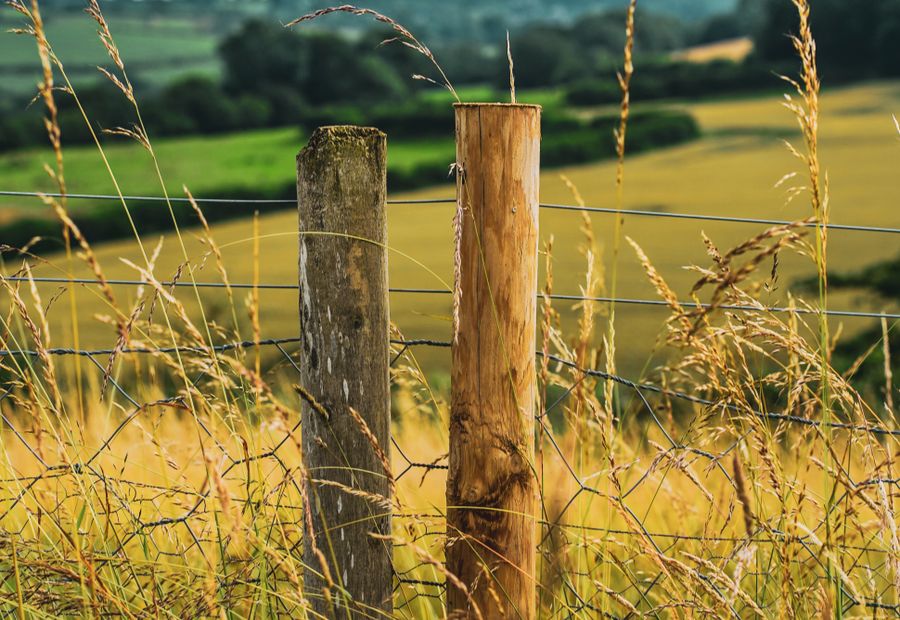
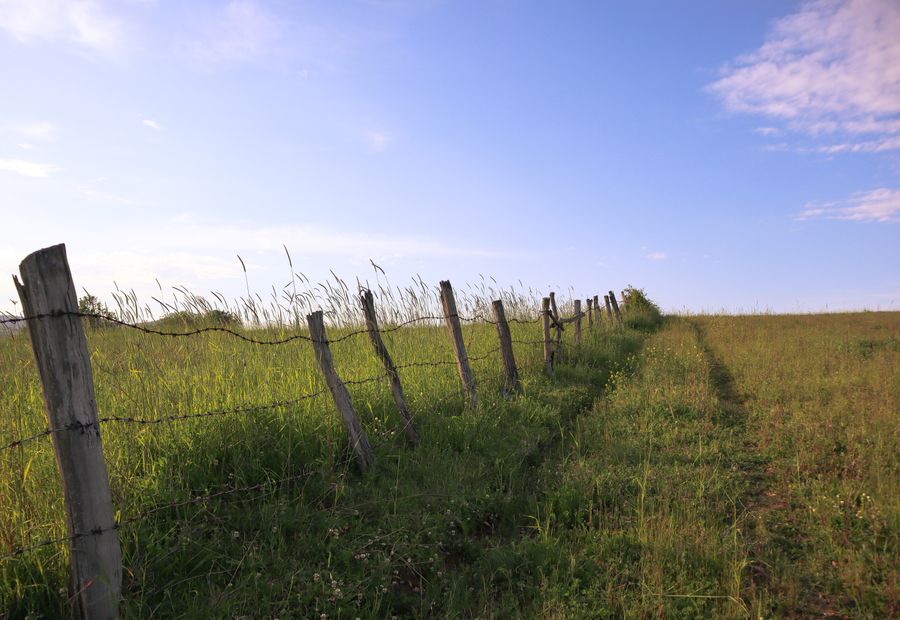
Barbed Wire Fence
Barbed wire holds cattle. It does not hold anything else safely. A goat walks between the strands and a horse opens a leg on the barbs. A five strand run stands about four and a half feet tall with the bottom strand roughly a foot off the ground, and the gaps close up toward the bottom because calves test low first. Missouri asks a lawful fence to reach four feet, and a five strand build clears that.
We run Red Brand two point and four point barbed wire, or Bekaert Gaucho high tensile barbed where a lighter roll at the same strength saves handling. Splices get proper wraps, never a knot. Every strand stretches against a wood corner assembly, and driven steel T-posts fill the line between assemblies. That split of duties is the whole point. More on barbed wire fence.
Board and Rail Fence
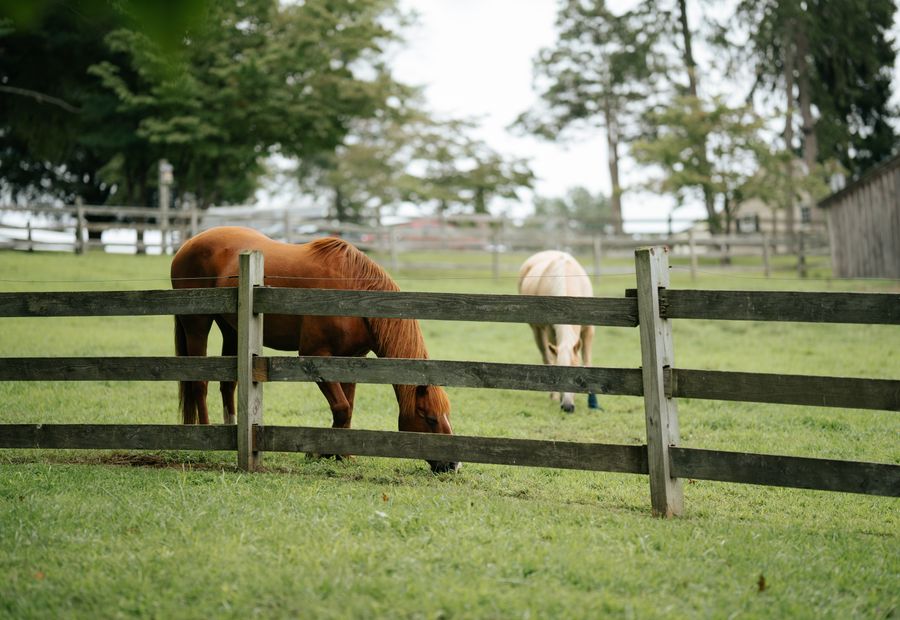
Horses run first and look second. A board fence gives them something solid to read at a gallop, and that is why horse people around Columbia pay for it by the foot. We frame three board and four board runs in rough sawn oak or treated pine, posts on eight foot centers so each board ends on a post, set deep and tamped so the top line stays straight down the paddock.
Boards mount on the inside face, the side the animal pushes, so the load hits the fastener sideways instead of trying to pull it out. Woven wire mesh backs the bottom bays where foals or minis share a lot. Paint or stain sheds water off the joints and buys years. Vinyl ranch rail retires the paint can for good. More on board and rail fence.
Pipe Fence and Corrals
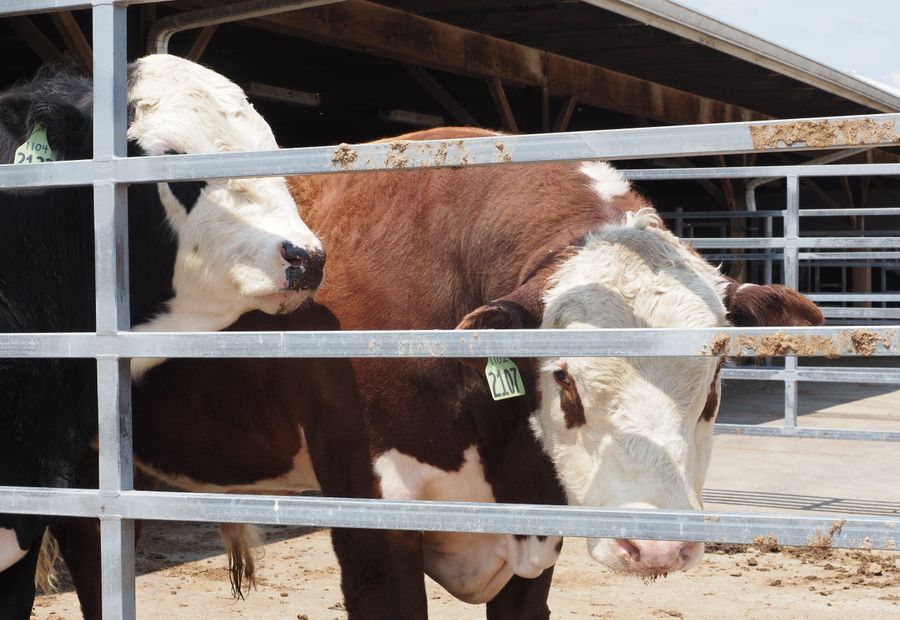
A working pen catches the full weight of an animal that would rather be somewhere else. Wood splits under that and wire bellies out. Welded pipe and continuous rail absorb it season after season, which is why a good set of pens outlives two rounds of pasture fence around them.
We weld pipe fence and continuous rail, set steel posts on concrete footings well below the frost line, and lay pens out around the flow of the work: a crowding tub, an alley wide enough for the stock and no wider, and gates hung where a person actually stands. Priefert and Powder River panels, chutes, and headgates go in when a bolted system fits the job better. Concrete under steel is right. Concrete around treated wood rots the post at the collar. More on pipe fence and corrals.
Old Fence Removal and Line Clearing
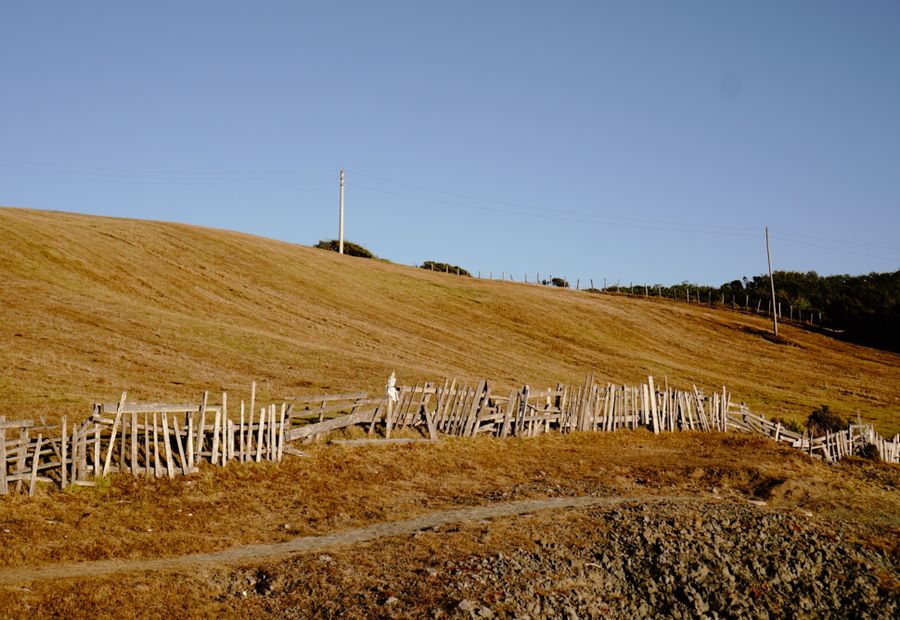
Getting to the line is the first bill on most of these jobs and the smallest one. Fence rows in this country grow cedar, locust, and blackberry the minute the cattle stop grazing them, and an old woven wire fence disappears into a hedge of it. No crew builds a straight fence through brush.
We cut the brush and trees off the line, pull the rotted posts, roll the old wire, and haul the scrap away so none of it ends up in a tire or a hay bale. Then we shoot the line and stake it before the auger comes off the truck. New fence laid over an uncleared old line hands the next crew the same mess. More on old fence removal and line clearing.
Farm Gates and Entrances
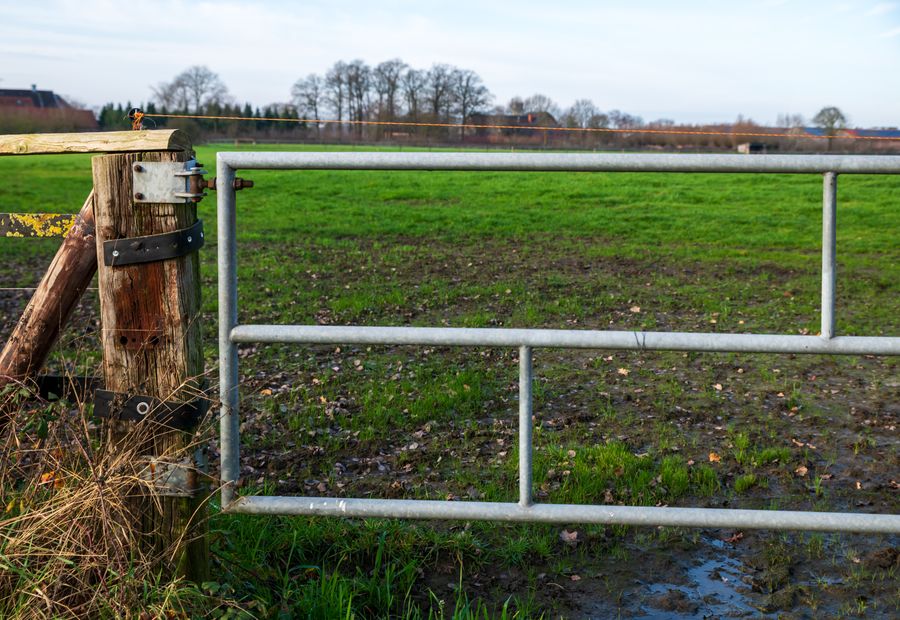
Gates go before fences do. All that weight hangs on one post and levers against it every time somebody opens it, twice a trip, every day of the year. A gate dragging in the dirt is almost never a bad gate. The hinge post moved.
We set hinge posts deeper than anything else on the line and brace them back into the fence, and wide openings get a steel pipe post in concrete. Tarter and Priefert tube gates hang in the widths the equipment needs, with a walk gate where people cross on foot. Ranch entrances get a header. Cattle guard footings get poured to carry a loaded grain truck. More on farm gates and entrances.
Why Mid-Missouri Landowners Call Us
- We build the ends before anything else. Corners, ends, gate openings, and sharp turns each get a full H-brace, and a tall multi-strand run gets a double. That assembly is what converts wire tension into downward load. Start at farm fence installation.
- Backfill goes in lifts and gets tamped. Tamping rebuilds the soil density the auger destroyed, and it leaves a post you can pull and reset later. Concrete around wood holds water against the grain. This shows up first on a hinge post.
- Wire gets specified, not just ordered. Class 3 galvanized coating carries far more zinc than Class 1, and soft wire stretches once and stays stretched. Compare barbed wire and high-tensile fence.
- Bottom ground gets bottom-ground details. Floodgates where the line crosses water, tie-downs at the low points, and extra depth in soft alluvial soil. A run laid straight across a swale leaves a hole, and a calf finds it. That shapes every woven wire layout we draw.
- The animal writes the spec. Cattle push against a fence, horses go over or through it, goats work the bottom until something gives. We ask what you are keeping in before we quote, and the answer moves the wire, the spacing, and the height. Horse owners usually land on board and rail.
- Everything in writing first. Free written estimate with the footage, fence type, corner count, and clearing, on a mile of pasture fence and on a set of welded pipe corrals alike.
Two Kinds of Ground in Boone County
Boone County hands a fence crew two different problems, and they sit within a half hour of each other. The Missouri River runs the southern edge of the county. Down in that bottom ground around Rocheport, McBaine, and on west toward New Franklin, the soil is deep wind-blown loess and river alluvium, hundreds of years of it, farmed in corn and beans. An auger drops through it like butter. That is the easy part and the trap.
Bottom ground moves. Water sits in it after a hard rain, and soft wet soil grips a post with far less friction than dry ground does. The river takes back what it wants in a wet spring. So in the bottoms we set deeper than the book calls for, we hang floodgates on every crossing so a rise takes out a panel instead of a corner, and we keep the real corner assemblies up on ground that stays put.
Climb out of the valley and the ground changes underfoot. The uplands across most of Boone and on into Callaway and Audrain are claypan country. You get a foot or so of silt loam, then it turns abruptly to heavy clay. That clay swells when it takes water and shrinks back when it dries, and it can do both between May and August. The swelling works a shallow post upward a little each year, and Missouri frost reaches two to three feet down to finish the job. Dig it wet and the hole slicks over into a glazed tube that never bonds to the backfill.
The upside is that the same clay grips a properly set post harder than any bottom soil will. So we auger the uplands when the ground has dried enough to break, scarify a slick hole before backfilling, tamp in layers, and put every post below the frost line. The bottoms get depth. The uplands get timing. This is Boonslick country, farmed since the salt springs days, and long before that the fences here were living hedge rows. What holds a fence up has always depended on which side of the valley wall you are standing on.
The stock mix follows the same map. Cow-calf herds graze the upland pasture and the wooded draws that are too steep to crop. Row crop ground fills the bottoms. Horse places and small acreages ring Columbia itself, and the University of Missouri runs research farms on the edge of town, so a fence line out here can just as easily be holding a herd of forty cows or bordering a plot of test corn. We quote all of it.
How a Fence Goes In
Walk It With You
We pace the run, count the corners and gate openings, note the draws and the water crossings, and mark the line. Boundary work follows a survey, never a guess. Footage and price go in writing before anything else happens.
Clear and Pull
Cedar, locust, and brush come off the line. Old wire gets rolled and hauled, rotted posts come out of the ground. A clean, staked line is what lets the rest of the build run true.
Ends First
Brace posts go in ahead of everything: six to eight inches across, three and a half to four feet down, deeper in the bottoms. Rail in, brace wire wrapped twice on the diagonal, twisted tight.
Line Posts and Wire
Spacing follows the fence. Twelve to sixteen feet for woven and barbed wire, eight to twelve for driven T-posts, eight foot centers for board. Wire rolls out and ties off against the braced ends.
Tension, Gates, Walk-Through
Each strand comes to tension on a ratchet strainer, high tensile picks up in-line springs, gates hang on braced hinge posts. Then we walk the finished run with you before the truck leaves.
What Farm Fence Costs Around Columbia
Fence prices by the linear foot, and the type of fence sets the band. Where a quote lands inside that band comes down to corner count, how grown up the line is, how much the ground rolls, and how far the crew has to haul material from the road. Every job gets a free written estimate first.
| Fence Type | Typical Range | Notes |
|---|---|---|
| Barbed wire, five strands | $4 - $8 per foot | A cattle fence. Wood corner assemblies with T-posts down the line |
| High-tensile smooth wire and electric | $3 - $7 per foot | Post count drops, end assemblies get heavier, energizer is its own line |
| Woven wire and field fence | $7 - $14 per foot | A fixed knot roll prices above hinge joint and stays square on a slope |
| Board and rail, three or four board | $16 - $32 per foot | Rough sawn oak or treated pine, with paint or stain after |
| Welded pipe fence and corrals | $20 - $45 per foot | Steel set on concrete footings, pens and alleys quoted by layout |
| Old fence removal and line clearing | $2 - $6 per foot | A grown-in cedar row prices above a clean pasture line |
| Farm gates, hung | $500 - $1,800 each | Opening width, how deep the hinge post goes, and the bracing |
A cross fence splitting one paddock off another lands in the low thousands. A boundary fence around a quarter section runs into five figures, because length is length and every angle in it is an assembly. Corners cost more than straight run, so a square field prices better per foot than one with six jogs in the property line.
What moves the price:
- Total footage, plus the number of corners and gate openings inside it
- Line condition: open pasture, heavy brush, cedar, or a grown-in old row
- Ground: claypan upland, river bottom, or a steep wooded draw
- Wire spec, meaning gauge, coating class, and knot type on woven wire
- Post choice, from treated pine to steel
- Access for the truck, the auger, and the wire trailer
Posts, Wire and Braces
Where a Post Actually Rots
Posts rot at the ground line, not at the bottom. That band is where air and water meet, and it is where the fungus lives. Pull a twenty year old post and you often find it solid at both ends and pencil thin in the middle. Pressure treated southern pine at ground contact retention stands for decades in this soil. Steel does not rot at all. Lightly treated pine at the ground line is why a fence that looked fine suddenly lies down in a wind.
Gauge and Coating
Twelve and a half gauge high tensile wire carries well over a thousand pounds before it lets go of its shape. Soft wire gives early, and once given it never comes back. Coating decides how long any of it lasts. Class 3 galvanized carries roughly three times the zinc of Class 1, and on the same fence line that is the gap between decades and a few hard years.
What an H-Brace Does
Two vertical posts. A horizontal rail near the top of both. A brace wire wrapped twice on the diagonal and twisted with a stick until it rings. The rail pushes outward, the wire pulls inward, and the two of them redirect the fence tension down into the posts instead of letting it lean the corner over. Many strands on a tall fence call for a double H.
Tamped, Not Poured
Backfill goes in layers and each layer gets tamped hard. That restores the soil column so the post grips the full depth of the hole, and it keeps the post resettable. A concrete collar around treated wood traps water against the post and rots it from the middle out, and it turns a post replacement into a demolition job. Concrete goes under steel pipe.
Tension You Can See
Tension is a measurement, not an opinion. A ratchet strainer brings high tensile wire to a set load, and the spring beside it displays that load from thirty feet away. Wire tightens in the cold and slackens in the heat, so a fence that read right in December reads loose in July. The strainer takes that back out in a minute.
Frequently Asked Questions
What is the fence law in Missouri?
Most of Missouri, Boone County included, runs under the general fence law. Under it, the person who owns the livestock is the one responsible for fencing them in. Where two neighbors both keep stock against a division fence, each one keeps up his own half. A handful of Missouri counties voted themselves onto the older local option rules instead, where adjoining owners share the fence whether or not either runs animals. Boone and the counties touching it follow the general rule, but the answer changes at some county lines, so check with your county before you settle anything with a neighbor.
What counts as a lawful fence in Missouri?
Plainly stated: posts with wire or boards standing at least four feet high, posts set firmly and no more than twelve feet apart, and the wire or boards spaced and fastened well enough to turn horses and cattle. Neighbors can also agree between themselves on a different fence, or have the question settled in the county court. Nearly everything we build sits above that floor, because the minimum is a legal line, not a construction spec.
What is the recommended distance between posts for a farm fence?
There is no single number, because it follows the fence type. Woven wire and barbed wire line posts go twelve to sixteen feet apart. Driven steel T-posts sit closer, at eight to twelve. Board fence lands on eight foot centers so each board ends on a post. We pull all of those in tighter on slopes, through draws, and around gates and water where cattle gather and push.
What is the minimum depth of a fence post in Missouri?
The state does not set one. What the law asks is that the post be set firmly. The working numbers we build to: line posts two and a half to three feet, corner and brace posts three and a half to four. All of it goes below the frost line, which runs two to three feet in this part of the state. The old rule still checks out too, which is to set the post as deep as the top wire is tall. In river bottom ground we add depth, because wet soil holds a post with less grip.
Does the ground around Columbia change what a fence costs?
It does. Bottom ground along the river digs fast, so labor per hole drops, but it needs deeper setting, floodgates on the crossings, and tie-downs at low spots. Upland claypan is slower going and has to be augered when it is dry enough to break clean. Neither is a problem. Both change the estimate, which is why we walk the line before we price it.
Why does a fence start sagging after a few years?
Three causes, and usually all three at once. There was no real brace at the ends, so the corner tilted toward the pull. The posts went in too shallow, so shrink-swell clay and frost lifted them. And the wire was either never tensioned properly or tensioned once and never touched again. Fix the ends first. Tightening wire against a leaning corner just pulls that corner down faster.
Should wood posts be set in concrete?
No. A concrete collar around a treated wood post holds water right at the spot where the post is most vulnerable, and it rots from there outward. It also makes the post nearly impossible to replace cleanly. Tamped backfill grips the whole soil column and can be dug and reset. Concrete does belong under steel, which is how we set corral posts.
What fence holds goats?
Woven wire with a fixed knot and graduated mesh, closed up tight down low, with no foothold anywhere a goat can reach. Goats rarely jump. They press through a gap or climb a hinge joint that flexes under their weight. Add a hot wire at nose height on the inside face and the testing stops. See field and woven wire fence.
Can you use barbed wire around horses?
No. A frightened horse runs at a fence instead of stopping short of it, and barbs open a leg badly. Horses need a fence they can see and one with a little give in it. Board and rail is the usual answer, sometimes with woven wire mesh behind the lower bays for foals. Vinyl ranch rail does the same work with no repainting. See board and rail fence.
What does a fence cost per foot?
Barbed wire is the cheapest at four to eight dollars a foot, high tensile sits close to it, woven wire runs seven to fourteen, board fence lands in the twenties and thirties, and welded pipe corrals sit above that. Corner count, clearing, and terrain move any of those numbers. Gates price individually. The written estimate is the real answer.
Do you build fence in winter?
Winter is quote season. Frozen ground and saturated ground both stop good work, because a hole augered in frozen or greasy clay will not take backfill and tamp the way it has to. We measure, price, and book through the cold months, then build once the frost is out. Around here the calls come thick after calving and before turnout.
Will you take the old fence out?
Yes, and we would rather. Old wire hiding in fescue ends up in a tire or a round bale, and leftover rotted posts push a new line off true. We pull the wire, roll it, take out the posts, clear the brush, and haul all of it off the place. See old fence removal and line clearing.
Are you licensed and insured?
Yes. We are a licensed and insured fence contractor covering Columbia, Boone County, and the mid-Missouri counties around it. Before any work starts you get a written estimate listing the footage, the fence spec, the corner count, and the price.
Fencing Boone County and the Boonslick Country
We build farm fence across Boone, Callaway, Audrain, Howard, and Cooper counties. That map covers Missouri River bottom ground on the south and west, claypan pasture and wooded draws through the middle, and open farm country north toward Centralia and Sturgeon. We set the fence to suit whichever ground it stands in.
Ready to Price a Fence?
Call (573) 555-0157 for a free estimate. Have a rough footage in mind, tell us what the fence has to hold, and say whether the line is open pasture or grown up in cedar. Mention whether it is a boundary with a neighbor or an interior cross fence, and whether it sits in the bottoms or up on the ridge. You will get a straight read on the fence type that fits the animal and the ground, a price per foot, and an honest answer on whether your existing fence can be rebraced and retensioned instead of replaced. Quotes go out all winter. Building starts when the ground breaks.