High-Tensile & Electric Fence in Columbia, MO
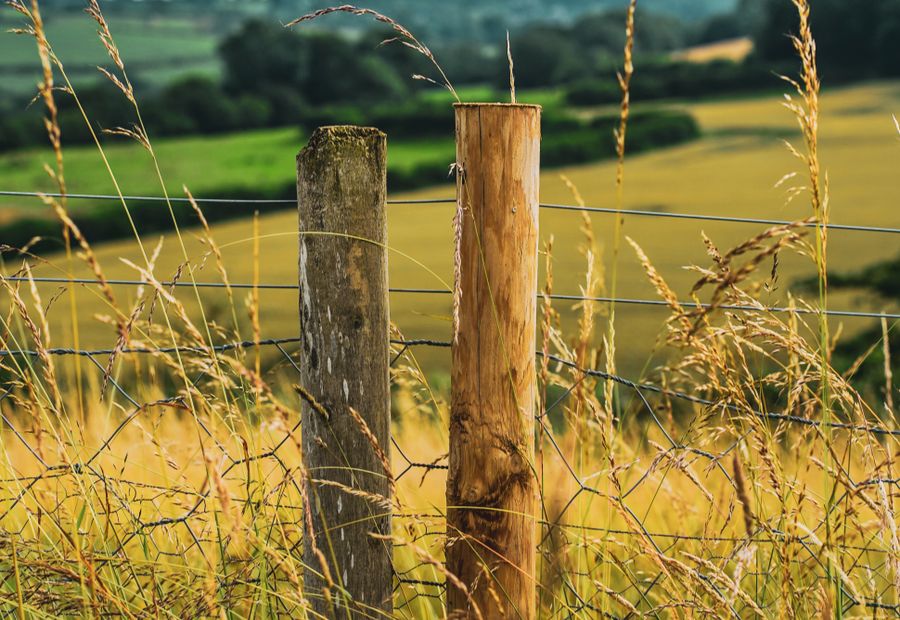
Columbia Farm Fence installs high tensile and electric fence for rotational grazing, cross fencing, boundary lines, and horse turnout across Columbia, Ashland, Centralia, Sturgeon, Fulton, and the pasture ground of Boone, Callaway, Audrain, and Howard counties, Missouri. We build permanent smooth wire fence and the temporary interior divisions that go with a grazing plan.
Tension on this fence is a number, not a feel. Twelve and a half gauge high tensile wire carries well over a thousand pounds before it starts to stretch, and we pull it to a set tension with a ratchet strainer while a heavy duty spring on the line shows where it sits. Gallagher and Speedrite supply our strainers, springs, energizers, and cut-out switches. Wire is Class 3 galvanized so the strand outlives the note on the ground. Ends and corners get an H-brace on CCA ground contact posts set three and a half to four feet deep and tamped in lifts, and a long run gets a double H because six or eight tensioned strands add up fast. Soft wire on light corners is the version that looks the same on day one and lies on the ground in year three.
Grounding on Two Different Soils
An energizer only works as well as its earth. Along the Missouri River bottom the alluvium stays damp deep into the season, so ground rods bite and the fence reads hot right to the far corner. Upland Boone County is the harder case. Silt loam over claypan bakes dry on top in late summer, and a short rod set in that dry layer gives you a fence that tests fine at the box and lets a heifer through a mile out. We drive extra rods, drive them deeper, and space them well apart on the upland jobs.
Posts, Insulators, and Layout
Line posts can run wide on a smooth wire fence because the wire carries itself, and we use battens or droppers between posts to hold spacing where stock crowd. Insulators are rated for the voltage, not just for the shape of the post. We lay out gates and cut-out switches so a section can be shut off without killing the whole farm.
Book a Walkover
We quote through the winter and build once the ground works. Call (573) 555-0157 to set a time.
How many wires do I need, and how far apart?
Cattle hold on five to six smooth wires, with the bottom one about a foot up and the spacing tightening toward the ground where calves try. Horses take a similar count but want the top wire visible, so we add a sight rail or a wide poly top. Goats need eight or more wires, closely spaced low, and usually alternating hot and ground wires. The species sets the wire count before anything else does.
Why does my electric fence read fine at the box and weak at the far end?
Nine times out of ten the grounding is short. An energizer needs a run of ground rods driven deep into moist soil and spread apart, not one rod by the barn. Upland claypan around here dries hard in late summer and stops carrying current, so the rods have to reach past that dry layer. The other common cause is a cracked insulator or a wire touching a steel post, which bleeds the charge to earth before it ever gets down the line.
Does high tensile wire really need retensioning?
Yes, but not often and not by rebuilding anything. Steel shortens in cold weather and lengthens in heat, so a fence that reads tight in February reads loose in August. That is what the in-line strainer is for. You put a handle on it, take a few clicks of slack out, and walk on. Without strainers on the line, the only way to take up slack is to pull the whole run again from the end.
Is high tensile cheaper than woven wire?
Per foot of finished fence, usually yes, because there are fewer posts and less steel in the ground. The savings do not come free. All that wire tension lands on the end assemblies, so the corners, ends, and any change of direction have to be built heavier than a woven wire fence needs. Spending less on the line and more on the ends is the whole trade.