Field & Woven Wire Fence in Columbia, MO
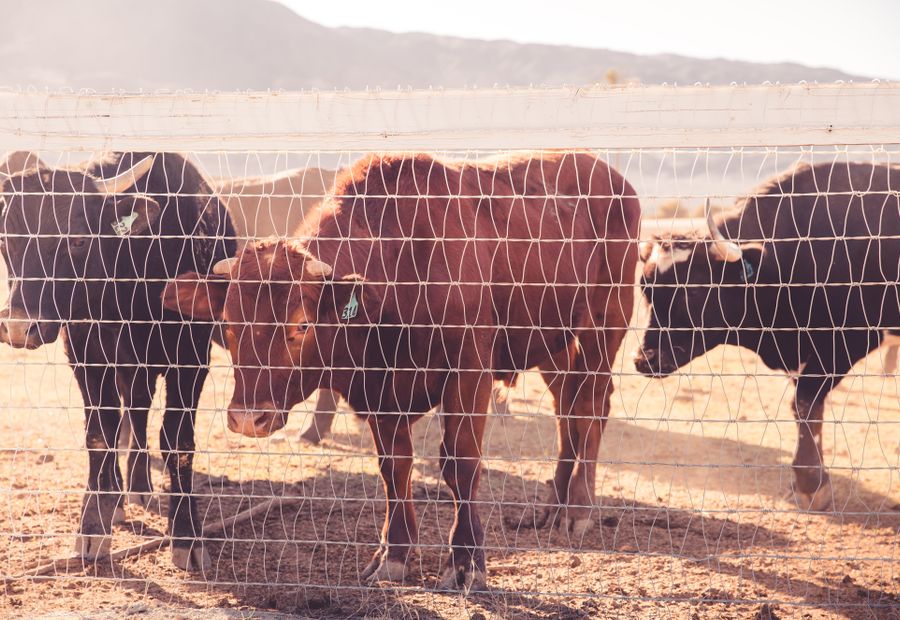
Columbia Farm Fence builds field fence and woven wire fence for cow-calf pasture, horse paddocks, goat lots, and boundary lines around Columbia, Ashland, Hallsville, Harrisburg, Rocheport, and the farm ground of Boone, Callaway, Howard, and Cooper counties, Missouri. Field fence and agricultural fence are the two names customers use for the same mesh, and it is the most common fence we put in the ground here.
Knot type decides how the mesh behaves. We build in Stay-Tuff fixed knot where the ground rolls and in Red Brand where a customer wants the traditional hinge joint on flat bottom ground. Wire carries Class 3 galvanized coating, which puts about three times the zinc on the strand that Class 1 does, and on the same fence line that is the difference between decades and years. Ends, corners, and gate openings get an H-brace with CCA ground contact posts six to eight inches across, set three and a half to four feet down and tamped in lifts. Tall mesh with many horizontals gets a double H, because the taller the fence the more load lands on the end. Mesh stapled to posts with no braced assembly behind it stretches once, sags, and never comes back tight.
Bottom Ground Versus Claypan
Woven wire behaves differently on the two soils this county has. Along the Missouri River bottom near Rocheport and New Franklin the alluvium is deep and soft, so a brace post carries less side resistance than the number on the tape suggests. We go deeper there and widen the H. On upland claypan the silt loam runs out about a foot down and turns to tight clay. That clay holds a post well once it is packed, but it slicks the hole wall in wet weather and it heaves at the surface after a freeze. Line posts go below the frost line, and we tamp instead of pouring concrete.
Following the Terrain
Mesh has to stay against the ground over every rise and through every dip. We set tie-down posts at the low points so a calf cannot roll under, and we hang floodgates where a fence crosses a wet weather draw so a rain does not take the whole run out. Line posts run twelve to sixteen feet apart and closer on the hills.
Get a Number
We price woven wire by the linear foot and count the brace assemblies separately. Ring (573) 555-0157 for a free estimate.
Which mesh spacing should I order for my stock?
Match the opening to the animal. Cattle do fine on a standard field fence with wide upper openings and tighter graduations near the ground. Horses want a small opening, four inches by four or smaller, so a hoof cannot punch through and catch. Goats need the smallest mesh you can buy, four by four at most, because a goat will find any opening its head fits and then push the rest of itself through. Sheep sit between horses and cattle.
Is fixed knot worth the extra money over hinge joint?
On rolling upland ground, yes. A fixed knot ties each crossing with its own wrapped wire, so the mesh cannot slide and the fence stays square running over a rise and down into a draw. A hinge joint gives when something hits it and then springs back, which is cheaper and works fine on flat bottom ground. Where cattle crowd a corner or the ground rolls, the hinge joint is what bags and buckles first.
Do I need a barbed strand on top of woven wire?
Most cattle fences here get one. A single barbed strand above the mesh keeps cows from rubbing the top wire down over a season, and it adds a few inches of height for very little cost. Horse fence usually gets a board or a smooth top wire instead, because barbed wire and horses are a bad combination. Goat fence often gets an offset electric wire on the inside rather than barbs on top.
How is a roll of woven wire stretched properly?
The roll is unrolled along the line, hung loosely on the posts, and then pulled from a braced end with a stretcher bar clamped across the full height of the mesh. Pulling on a few wires instead of the whole face distorts the roll. Tension comes up until the tension curves in the wire partly straighten out, and then the mesh gets stapled off, never driven tight against the wood. Stretching against an unbraced post just pulls the post over.