Board & Rail Fence in Columbia, MO
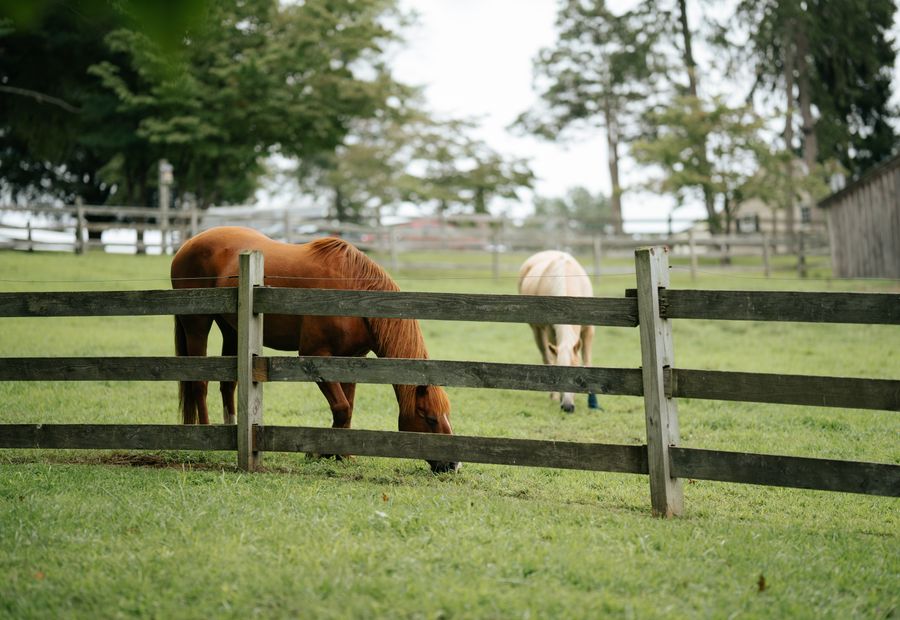
Columbia Farm Fence builds board and rail fence for horse paddocks, arenas, pasture turnout, and farm entrance lines across Columbia, Ashland, Hallsville, Rocheport, Fulton, and the small acreages of Boone, Callaway, Howard, and Cooper counties, Missouri. Around Columbia the horse places sit right next to working cattle ground, and a board fence is what most of those owners want on the road frontage.
Board fence is a post fence, so the posts decide everything. We set CCA ground contact treated posts, five to six inches across for line and larger at corners and gates, three feet down on the line and deeper at every end. Spacing follows the lumber at eight feet on center so each rail lands on two posts with a full bearing. Rails go on the stock side of the post, so a horse leaning into the fence pushes the board against the post rather than against the fastener. We use ring shank nails or structural screws, two per bearing, and we cut the rail joints staggered instead of stacking every joint on one post. Rails hung on the outside face with a single nail per end come off the first time a horse leans.
Setting Posts on Bottom and Upland
A board fence shows its posts. One post that moves puts a wave in a hundred feet of rail, so ground matters more here than on a wire fence. In Missouri River bottom alluvium the digging is easy and the soil is soft, so we go deeper than the standard and tamp the backfill hard in thin lifts. On upland claypan the tight subsoil holds a post well, but it also holds water and heaves it after a freeze, so posts go below the frost line and the hole gets no water sitting in the bottom. We tamp rather than pour, because concrete against treated wood keeps a wet collar at the ground line.
Paint, Stain, and Upkeep
Finish is protection and appearance at the same time. White paint is the classic horse farm look and needs redoing on a schedule. Oil based stain in black or brown hides dirt, soaks in rather than films over, and touches up without scraping. Bare oak is a valid choice if you like grey.
Pricing a Board Line
Board runs at the top of the per foot range because of the post count and the lumber. Call (573) 555-0157 for a measured quote.
Three board or four board?
Four board is the standard for horses. It puts a rail near the top of the shoulder, closes the gap a leg can get through, and reads as solid from a distance. Three board costs less, goes up faster, and suits cattle, ponies, and a driveway line where the fence is mostly for looks. Foals and minis are the argument for four board or for three board with mesh behind it.
Oak or treated pine for the rails?
Rough sawn oak is heavier, stiffer, and harder for a horse to break, and it weathers to grey if you leave it bare. Treated pine is lighter, straighter, takes paint and stain evenly, and resists rot at the fastener without any finish. Oak rails on treated pine posts is a common mid-Missouri combination and a good one. Untreated pine rails against the ground are the version that goes soft in a few seasons.
Why do horses need a fence they can see?
A horse under pressure runs first and looks second. A thin wire disappears at speed, so the horse hits it and cuts, or gets a leg over it and panics. A solid rail at eye height stops the horse before it commits. That visibility is the whole reason board fence costs what it does, and it is why we set a sight rail or a top board even on a wire horse fence.
Should I add wire mesh behind the boards?
Add it if you have foals, minis, dogs, or a fence line along a road. Small stock go under and through the gaps that a full grown horse never notices. We hang no-climb mesh on the inside face, stretch it from a braced end, and let the boards do the visual work while the mesh closes the openings. Boards alone are fine for adult horses on interior pasture.